Posted in Investment
Australia’s lust for gold wanes as banks make bullion buying harder
 "Australia’s lust for gold wanes as banks make bullion buying harder")
Australia's tougher economic conditions mean demand for gold is sliding as well as real estate.
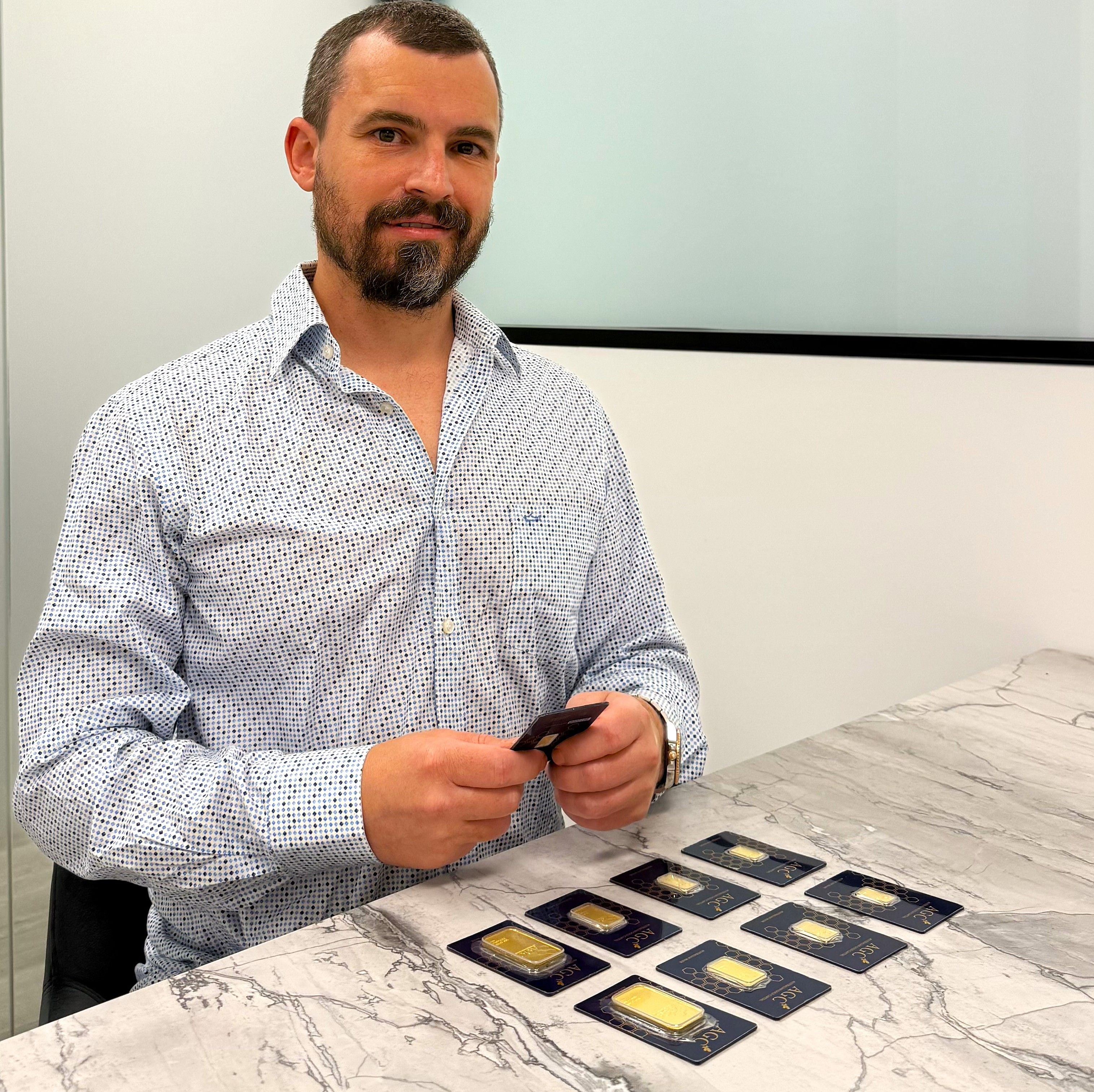
Following the Reserve Bank of Australia's recent decision to keep interest rates the same, Australian Gold Capital chief executive Michael Kukulka says the Australian market for gold and silver is cooling after the biggest boom the industry has ever experienced.
"The industry had a six-month period between October last year and March this year where the demand for gold was unlike anything we have seen before," said Mr Kukulka.
"It was a crazy time to be alive. We had lines out the door, up the hallway and back to the elevators. We had extra staff working and overtime shifts running at night just to pack orders for the following day.
"There were days I was working 18 hours. I even only managed to take two days off for the birth of my baby daughter. That's how extraordinary the demand had become.
"Maybe it was a case of people fearing for the future of the economy, but since the end of March the market has cooled significantly."
Mr Kukulka said consumers who were struggling financially generally chose to sell jewellery during tough times, but those who had sold property quite often invested in gold.
"Gold is perceived by many people as being a safer asset than holding cash in a bank," he said.
"A big proportion of our customer base is made up of everyday Aussies and many of them, because of cultural beliefs or their own life experiences, tend to shy away from putting all their assets into the banking system.
"Gold can be sold or pawned instantly almost anywhere in the world, no matter the political environment you are in.
"The Indian community in Australia is traditionally a very strong buyer of gold, especially around the time of their religious festivals.
"For them, buying gold is a part of their cultural traditions, their religious beliefs, and also provides some measure of financial security."
Mr Kukulka said one of the biggest challenges for people who wanted to buy precious metals was coming from their own banks.
"The banks are exercising extreme caution with medium to large transactions and are making it more difficult for people to buy gold bullion," he said.
"Banks will often block or reverse payments to businesses such as ours on the grounds that the transaction is a 'potential scam' or 'fraud' despite what their customers want.
"This type of extreme banking behaviour is unfortunately becoming more commonplace and it seems the banks are determined to hinder people from investing outside of the financial services industry."
Kukulka, who has more than 15 years' experience in the precious metals industry, said the level of intervention by banks had become increasingly concerning.
"We have had customers tell us their banks have asked them to log into our investor portal and provide screenshots of their transaction history or their gold and silver holdings," he said.
"In other cases, banks have continued to treat transactions as potential scams despite customers repeatedly confirming they are legitimate and providing tax invoices generated by our system as evidence of their purchases.
"In one particularly troubling case, a customer purchased $200,000 of gold from us using funds from two different banks. One of those banks, which she used to pay $60,000 towards the purchase, subsequently initiated a recall of that $60,000 after treating the transaction as a scam, despite the customer repeatedly confirming that the purchase was legitimate and that she wanted it to proceed," Kukulka said.
"Initially, the entire $200,000 was removed from our bank account. We were not given a clear explanation as to why the entire amount was taken. Of that amount, $140,000 was subsequently returned, also without explanation, while the remaining $60,000 was retained following the recall.
"The customer continued telling her bank that the transaction was legitimate and wanted to resend the $60,000 to us. She told us her bank warned her that if she attempted to send the money again, it would lock her account.
"The result was that we were left with $140,000 of a $200,000 purchase and had to sell part of the customer's precious metals position back into the market to cover the $60,000 shortfall. That crystallised a loss for the customer.
"I felt terrible for her because she knew exactly what she was buying and repeatedly told her bank that, yet an intervention completely outside her control ultimately cost her money.
"Our experience has been that obtaining an effective remedy through the existing dispute-resolution system can be extremely difficult, if not impossible.
"We subsequently took the matter through the Australian Financial Complaints Authority, but AFCA found in favour of our bank and accepted that it was entitled to allow the $60,000 to be recalled.
"What was particularly frustrating was that the underlying transaction was legitimate. Another bank involved in the same $200,000 purchase returned the other $140,000, both the customer and our business maintained that there was no scam, and we had conducted enhanced customer due diligence on the customer as part of our AML/CTF obligations.
"Yet none of those facts changed the outcome of our AFCA complaint. The critical issue was whether our bank was entitled to act on the fraud concern at the time, rather than whether the transaction ultimately turned out to be fraudulent.
"In practical terms, a bank can therefore be wrong about there being a scam, while its decision to block or delay a transaction — or even recall a payment that has already been made — may still be regarded as reasonable.
"That experience illustrates the problem. A transaction can ultimately be legitimate, the customer can confirm there was no scam and documentary evidence can support the purchase, yet the intervention can still be considered justified. Meanwhile, the customer can be left carrying the financial loss.
| Posted in:NewsInvestmentGoldBanking |
Kings Forest servo wins green light
 "Kings Forest servo wins green light")
The planned Kings Forest Service station has received the green light to operate 24 hours a day.
The site, which was already approved to be used as a service station, has now gained New South Wales Government approval to operate 24-hours a day, seven days a week.
Some residents and the Tweed Shire Council had opposed the project, claiming a 24-hour service station could increase noise pollution, traffic, litter and food exhaust emissions while its illuminated signage could impact on residential amenity.
The approval is a victory for developer Geoff Booth of BGlobal and planning consultancy Sargeant Planning.
Mr Booth’s company bought the already approved site from Leda Group and then applied for the planned servo, west of Kingscliff in northern NSW and a kilometre from the new Tweed Valley Hospital, to be a 24-hour operation.
The new service station will service the residents of the area including the new Kings Forest community being developed by Australia Stock Exchange-list property giant Stockland.
The approved development also includes several building design changes and includes a takeaway outlet that has been leased by KFC for 15 years.
Mr Booth said arguments put forward by Sargeant Planning were crucial to obtaining government approval.
“Sargeant Planning showed through extensive research that the proposed changes met the requirements under the Planning Act and would not create greater environmental impacts,’’ Mr Booth said.
“This change will benefit the growing community in Tweed Shire with the new centre at the entry of the developing Kings Forest Estate.
“Kings Forest is one of the largest housing projects in the Tweed Shire and it will become home for more than 10,000 people.”
Mr Booth said the company had applied for State Government approval because the council planning process was not efficient.
“The planning process is so slow and Council’s actions opposing the proposal caused further delays,’’ he said.
“Thankfully, the State Government agreed with the sound planning arguments put forward by Sargeant Planning, enabling an approval to be issued.”
Sargeant Planning director Boyd Sargeant said the original Kings Forest approvals, which dated back to more than a decade ago, were very complex.
“We were able to demonstrate the proposed changes did not have negative noise or lighting impacts and would service the large interstate commuter traffic moving along this corridor between NSW and Queensland,” Mr Sargeant said.
Detailed planning is now underway to enable construction to begin.
| Posted in:InvestmentPropertyKings Forest |